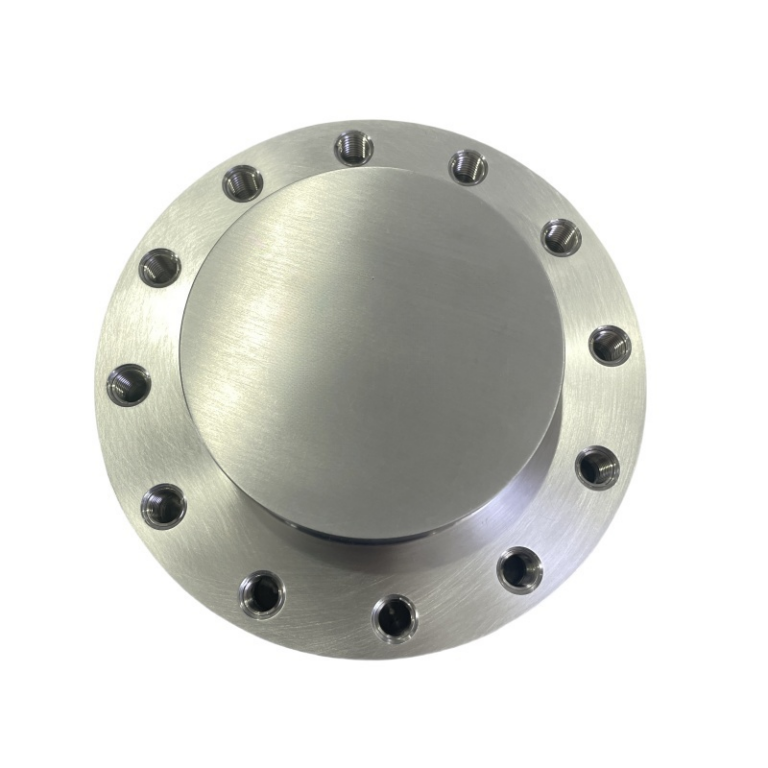
In the fields of materials science and engineering, lightweight has become one of the key factors that promote technological progress and industrial upgrading. Titanium and aluminum, as two important lightweight metal materials, play an important role in aerospace, automobile manufacturing, electronic products, and other industries due to their unique physical and chemical properties. This paper aims to deeply explore the advantages and disadvantages of these two materials in different application scenarios by systematically comparing the density of titanium and aluminum and their lightweight properties, and provide a scientific reference for material selection in engineering practice.

The basic properties of titanium and aluminum
Titanium is a transition metal with a silver-gray luster, with an atomic number of 22 and a relative atomic mass of 47.867. In nature, titanium exists mainly in the form of ilmenite and rutile. The density of titanium is 4.506 g/cm³, which is between aluminum and stainless steel. Titanium has a melting point of up to 1668℃, and it has good heat and corrosion resistance. In addition, titanium has excellent biocompatibility and does not cause human rejection, so it has been widely used in the field of medical implants.
Aluminum is a light metal with an atomic number of 13 and a relative atomic mass of 26.9815. Aluminum is rich in the earth’s crust and mainly exists in the form of bauxite. The density of aluminum is 2.70 g/cm³, which is about 60% of titanium. The melting point of aluminum is 660.32°C, and it has good thermal conductivity and electrical conductivity. A dense oxide film easily forms on the surface of aluminum, which gives it a certain corrosion resistance. In addition, aluminum has good ductility is easy to process and mold, and is widely used in packaging materials and building materials.
The density comparison between titanium and aluminum
Density is an important indicator for measuring the lightweight properties of materials and is defined as the mass per unit volume of matter. The calculation formula for density is:ρ= m/V, where ρ represents density, m is mass, and V is volume. According to international standard ISO 1183, the density of metal materials is usually measured using Archimedes’ principle. Experimental data show that the density of titanium is 4.506 g/cm³, while the density of aluminum is 2.70 g/cm³. This shows that the mass of titanium is about 1.67 times that of aluminum at the same volume. From an absolute lightweight perspective, aluminum has more advantages than titanium. However, in practical applications, comprehensive performance indicators such as the specific strength of the material (the ratio of strength to density) need to be considered.

Analysis of lightweight application of titanium and aluminum
- Aerospace
In the aerospace field, titanium and aluminum play important roles. Titanium alloys are widely used in aircraft engines and fuselage structural parts due to their high specific strength and high- temperature resistance. For example, in the Boeing 787 Dreamliner, the use of titanium alloy reaches 15%. Aluminum alloys are widely used in aircraft skins and internal structures due to their low density and good processing properties. In Airbus A380 aircraft, the proportion of aluminum alloy used is as high as 61%.
- Automobile manufacturing field
In the field of automobile manufacturing, lightweight is the key to improving fuel efficiency. Aluminum alloys are increasingly used in engine cylinder blocks, wheel hubs, and body panels. The body of the Tesla Model S uses a large amount of aluminum alloy, which effectively reduces the weight of the entire vehicle. Due to the high cost, titanium alloy is mainly used in the exhaust system and suspension components of high-end sports cars.
- Electronic products field
In the field of electronic products, aluminum alloys are widely used in laptop cases and smartphone frames due to their good thermal conductivity and aesthetics. Apple’s MacBook series uses an integrated aluminum alloy molding process. Titanium alloys are used in high-end smartwatches and glass frames due to their biocompatibility and anti-allergic properties.
Comprehensive evaluation of lightweight properties of titanium and aluminum
- Absolutely lightweight
From an absolute lightweight perspective, the density of aluminum is significantly lower than that of titanium, which has obvious advantages in applications that pursue minimum weight. For example, in automobile manufacturing, the use of aluminum alloys can significantly reduce body weight, thereby improving fuel efficiency. However, titanium is still irreplaceable in situations where high strength and durability are required due to its excellent specific strength and corrosion resistance. For example, in the aerospace field, the specific strength of titanium alloy is more than 1.5 times that of aluminum alloy, and can better withstand stress in extreme environments.
- Cost-effective
In terms of cost-effectiveness, aluminum is much lower than titanium, which makes aluminum more economical in large-scale applications. For example, in electronic products, the low cost and good processing properties of aluminum alloys make it the material of choice. However, for some high-end applications, the excellent performance of titanium can lead to longer service life and lower maintenance costs, resulting in better cost-effectiveness in long-term use. For example, in medical devices, the corrosion resistance and biocompatibility of titanium alloys can significantly reduce replacement and maintenance frequency.
- Environmental impact
Environmental impact is also an important consideration in material selection. The recycling rate of aluminum is high, and the energy consumption of the recycling process is low, which meets the requirements of sustainable development. For example, in packaging materials, the easy recyclable properties of aluminum alloys make it the first choice for environmentally friendly packaging. Titanium is highly energy-consuming during extraction and processing, but its long service life offsets the environmental impact to a certain extent. For example, in the aerospace field, the durability of titanium alloys can reduce the frequency of material replacement, thereby reducing the overall environmental burden.

Future development trends
With the advancement of material science and technology, the cost of titanium alloys is expected to decrease, and the performance of aluminum alloys will continue to improve. For example, the research and development of new titanium alloys may reduce their production costs and enable them to be applied in more fields. At the same time, the emergence of new composite materials may provide more lightweight options. For example, carbon fiber-reinforced composites perform well in lightweight and may complement titanium and aluminum in the future.
In engineering practice, the optimal material selection should be made based on specific application scenarios and performance requirements, and comprehensively considering the lightweight properties, mechanical properties, cost-effectiveness, and environmental impact of the material. For example, aluminum is still the first choice for applications that pursue extreme light; titanium has irreplaceable advantages when high strength and durability are required.
Conclusion
Through a comparative study of the lightweight properties of titanium and aluminum, the following conclusions can be drawn: aluminum has obvious advantages in absolute lightweight and cost-effectiveness, and is the first choice material for most lightweight applications; while titanium still has an irreplaceable role in high-end fields such as aerospace and medical devices due to its excellent specific strength and corrosion resistance. In the future, with the advancement of material science and technology, the cost of titanium alloys is expected to decrease, and the performance of aluminum alloys will continue to improve. At the same time, the emergence of new composite materials may provide more lightweight options. In engineering practice, the optimal material selection should be made based on specific application scenarios and performance requirements, and comprehensively considering the lightweight properties, mechanical properties, cost-effectiveness, and environmental impact of the material.
DMTC has a professional technical team that can provide the best solutions for your projects. When you need expert help during the material selection phase of your project, you can contact DMTC. We provide professional customized services. As a manufacturing expert with extensive experience, we ensure fast delivery of accurate and high-quality parts. If you have ideas for a new project, please contact us immediately; we provide instant quotations. Our goal is to provide a satisfactory manufacturing experience!