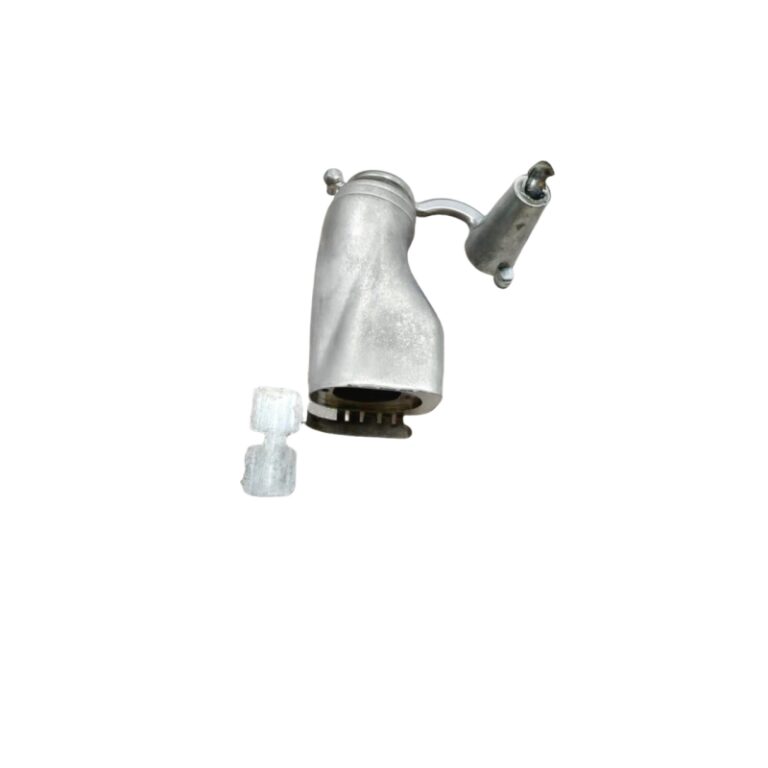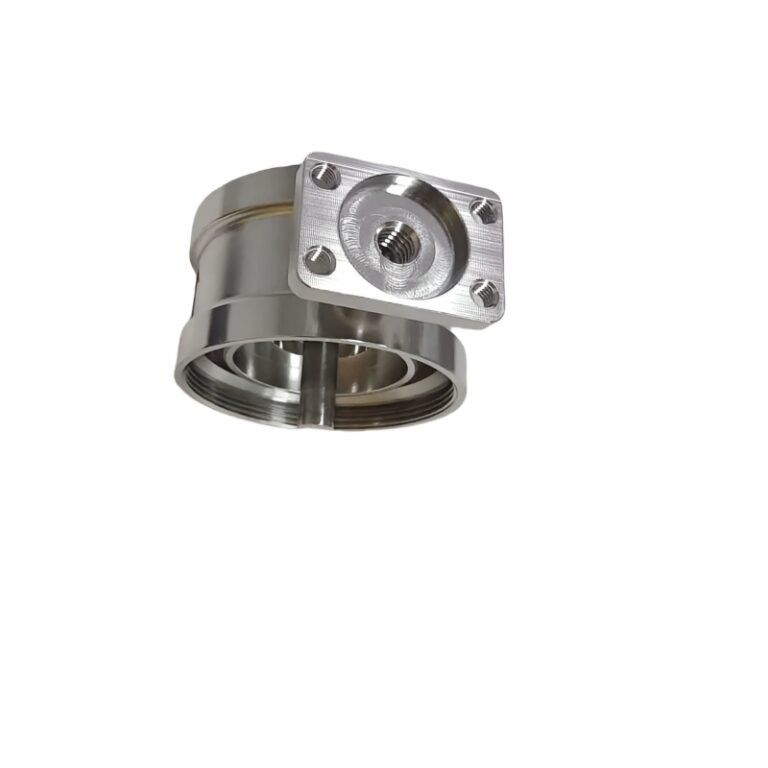
With the recent acceleration of industrial upgrading in various industries, 3D printing technology has made progress, and R&D personnel have gradually become accustomed to using 3D printers for projects that produce clear plastic objects. The transparency of product materials is pursued in many industrial applications, from producing lenses for optical engineering or medical purposes to making beautiful product shells. In this article, we will introduce the knowledge about transparent material 3D printing, the available 3D printing materials, and how to overcome the challenges associated with 3D printing technology.

What is clear plastic printing?
Clear plastic printing always means clear plastic 3D printing. Clear plastic 3D printing refers to 3D printed models with varying degrees of transparency. The diversity in the resulting end clear plastic product can be attributed to numerous factors, including the nature of the 3D printed model, the type of 3D printer used, 3D printing settings, the choice of material, and post-processing. It is important to understand that achieving completely clear plastic 3D printing can be challenging, depending on the 3D printing technology and the selected printing material.
Key Considerations for Maximizing Transparency
- To achieve transparency in 3D printed parts, three rules must be followed:
- The plastic material you use must be clear in itself.
- The 3D printing process you choose must prevent bubbles from forming in the part.
- The desired transparent areas must have a smooth surface.
Following these rules will ensure your 3D-printed parts are clear, but designers and engineers should consider a few additional factors to maximize transparency.
Complex geometries—especially curved designs—naturally refract more light and are less likely to be clear. Additionally, thicker walls scatter more light than thin walls, so it can make the printed part appear more opaque. To minimize light refraction and maximize transparency, design your 3D-printed parts using simple, clean lines and the thinnest walls possible.
Clear Plastic Materials For 3D Printing:
PLA: Clear PLA is a popular choice for beginners because it is easy to work with and print. However, the PLA has limited transparency and can usually only achieve a semi-transparent effect.
PETG: Stronger and more transparent than PLA. PETG creates better inter-layer bonding when printed, which helps reduce light scattering and improves clarity.
TPU: This is a flexible material, but it also comes in a transparent option. The transparency of TPU depends on the thickness and printing settings.
PMMA (Acrylic): This material is very transparent and can achieve a glass-like effect. However, PMMA is difficult to control during the printing process and requires experienced users.
Resin-based printing is the technology of choice for making transparent parts because the layer lines are less noticeable than with filament-based methods. Currently, several resin-based technologies can use clear resins as a base material to provide nearly transparent parts without much post-processing. Clear resins will produce transparent parts after curing under UV light, but there are some tricks to get the clearest prints, such as printing at 100% infill density. This method will increase the user’s printing time, but the parts it produces can be “crystal clear” and can even be used to make functional camera lenses.

3D Printing Modeling for Maximum Transparency
For product models that are to be 3D printed, it is important to remember that more complex geometries tend to refract light more and are less likely to be very clear.
FDM 3D Printing Technology
FDM 3D printing technology is one of the most well-known printing technologies in the 3D printing world. It uses a thin filament to make your 3D-printed model. The filament is heated in the nozzle and ejected layer by layer in the style of the object plane.
Due to the characteristics of FDM 3D printing technology, small gaps may form between the layers, which helps to reduce the light that passes through the surface of the 3D printed model. The layer lines that tend to be more visible when using FDM 3D printers also scatter light. It is this light refraction that interferes with transparency, and minimizing it during the design and production process can significantly improve the results.
In addition, finding the best settings for transparent printing with an FDM 3D printer is a challenging process; it needs to try and find the best parameters that work for the machine and the selected material. Among these settings, you must adjust the following parameters: material extrusion temperature and flow rate, print platform temperature, print speed, layer height thickness, and nozzle diameter.
SLA 3D Printing Technology
SLA printing technology uses a photochemical process to produce parts using polymer photosensitive resins. A strong advantage of this 3D printing process is the very thin layers, so it produces very good results for transparent 3D prints.
SLA has very satisfactory transparency. This 3D printing method is best suited for visual applications that pursue a smooth surface finish and a high level of detail. However, it is important to note that SLA 3D prints have support structures that need to be removed in the post-production stage, which may affect the final appearance of the model.
PolyJet
PolyJet is an advanced additive manufacturing technology that delivers results comparable to injection molding but with all the benefits of additive manufacturing. During this process, a print head jets a layer of photopolymer resin into a gel matrix and then cures the resin under UV light. This produces an incredibly smooth layer of material and an equally smooth surface finish. Like SLA, PolyJet is ideal for creating highly detailed parts.
Post-Processing Options and Key Considerations for Clear Plastic Parts
No matter what 3D printing process or material you use, your parts must be post-processed to shine. Manual sanding and polishing is one of the best options for clear 3D printed parts with simple shapes and little detail, but it is difficult to remove all layer lines with manual finishing alone. In addition, manual sanding may leave micro scratches on the surface. For best results, use a series of incremental sandpapers to smooth the surface of the part, then polish it with an acrylic cleaner and a microfiber cloth—similar to the process used to create highly polished metal parts.
Spraying is an easy way to increase clarity without reducing detail and is ideal for parts with intricate details. Simply applying a coat of clear spray will mask layer lines, but it can also cause yellowing. For a smooth, glass-like finish, prepare the part by manually sanding the surface before spraying.
To get the clearest possible finish in post-processing, apply a resin coat. This method only works on flat or nearly flat surfaces, but it is ideal when you need a completely transparent part. Resin infusion can also be used to create a smoother surface for FDM or PolyJet printed parts. The adhesive bridle fills in any scratches on the part, creating a completely smooth surface.
A lot of preparation goes into 3D printing translucent or transparent parts. You must determine what type of transparency your application requires, select the most appropriate clear resin, choose the 3D printing process that allows the most light to pass through, and finish the part using the best finishing process. An experienced manufacturer can optimize the product fabrication process from concept to delivery.