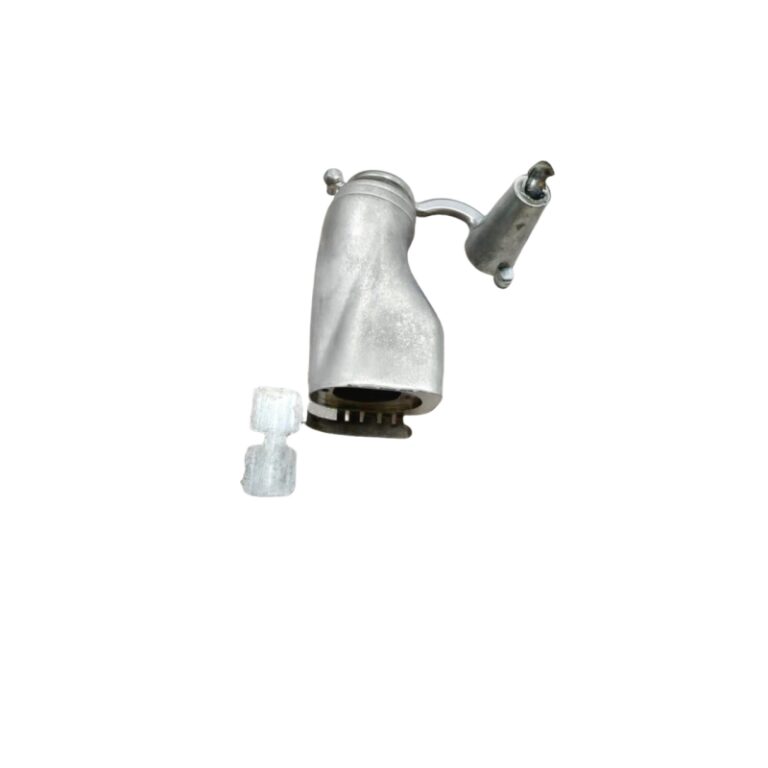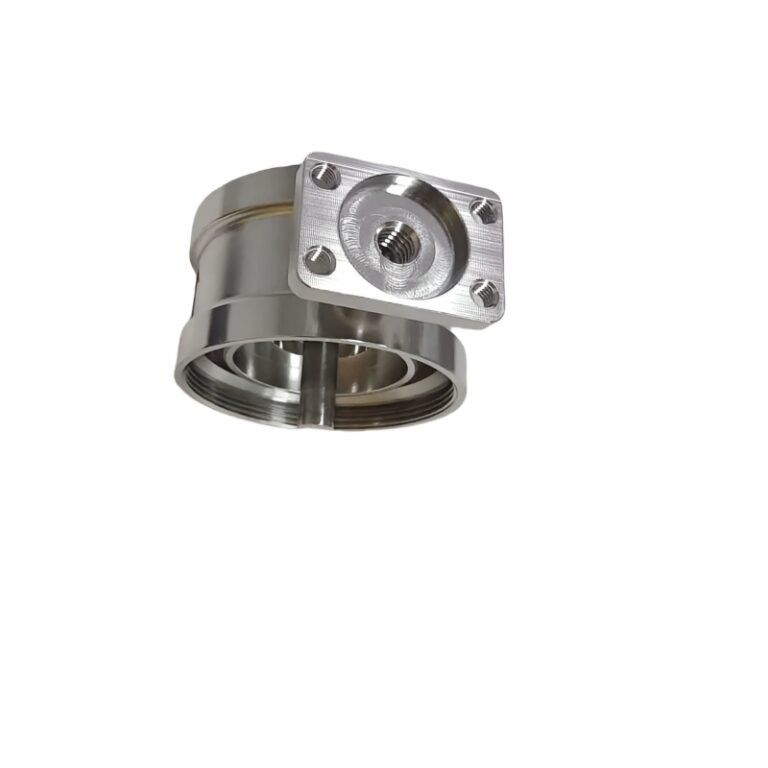
The casting process has a pivotal position in modern industries. It is widely used in multiple fields such as the automotive industry, aerospace, and medical equipment, and promoted improved industrial production efficiency and product quality. This article will introduce 11 different types of casting processes in detail to introduce their definitions, advantages, disadvantages, and applications.

1. Sand Casting
Sand casting is a casting method for creating castings in sand. It uses sand and type sand as the main material. The original sand is made into sand cores and sand types through the equipment such as core and shape, and then the melted metal liquid is poured into the casting shape. The casting was obtained after cooling solidification and cleaning treatment.
2. Investment Casting
Investment casting usually refers to the appearance of the molten material, covering several layers of refractory materials on the surface of the appearance, and melting the appearance of the shell to obtain a divided-free plant. You can fill out the casting plan for sandwiching. Often called “lost wax casting”.
3. Die Casting
Die casting uses high pressure to press the metal solution at high speed into a precision metal mold-type cavity. The metal solution cools and solidifies under pressure and forms a cast.
4. Low-Pressure Casting
Low-pressure casting refers to the method of filling the casting of liquid metals under the action of lower pressure (0.02 ~ 0.06MPa) and crystals under pressure to form a cast.
5. Centrifugal Casting
Centrifugal casting is a method of pouring molten metal into a rotating mold, filling the casting, and solidifying it into shape.
6. Gravity Die Casting
Metal casting refers to a method of forming a method of liquid metal-filled metal casting and cooling and solidifying in the shape under the action of gravity.
7. Vacuum Casting
Vacuum casting is an advanced die-casting process that eliminates or significantly reduces the pores and dissolved gas in the die-casting by eliminating the gas in the die-casting mold cavity during the die-casting mold cavity during the die-casting mold cavity.
8. Squeezing Die Casting
Squeezing casting is a method of solidifying and flowing the liquid or semi-solid metal under high pressure and directly obtaining the method or rough. It has the advantages of a high liquid metal utilization rate, a simplified process, and stability of quality. It is an energy-saving type with potential application prospects.
9. Lost Foam Casting
Lost foam casting (also known as solid mold casting) is a new casting method in which wax or foam models of similar size and shape to the casting are bonded into a model cluster, brushed and dried, buried in dry quartz sand for vibration molding, and poured under negative pressure. The model is vaporized, the liquid metal occupies the position of the model, and the casting is formed after solidification and cooling.
10. ContinualCasting
Continual casting is an advanced casting method. The principle is to pour the melting metal into a special metal type called a crystallizer, solidifying (shell) casting, continuously from the other end of the crystallizer from the crystallizer. Pull out, it can get a cast of any length or specific length.
11. Shell Mold Casting
Shell mold casting is a casting method that uses hot melt resin and silicon sand as a modeling material. It covers the preheated metal template on the heated and hardening sand to make it into a thin shell and then warms the shell to achieve sufficient strength and stiffness. Finally tight or sticking with resin to form a casting.

Casting process advantages and disadvantages and applications:
| Types | Advantages | Disadvantages | Applications |
| Sand Casting | 1. Strong adaptability;
2. High flexibility; 3. Suitable for complex shape parts |
1. High production cost;
2. Poor surface quality; 3. Low precision |
Automotive engine cylinder block, cylinder head, crankshaft castings |
| Investment Casting
|
1. High dimensional precision and geometric precision;
2. Can cast complex shape castings; 3. The type of alloy is not limited, the production volume is flexible |
1. The process is complicated, high cost, and not suitable for the production of large castings;
2. High production costs and casting performance may be affected |
Blades and impellers of aircraft engines, steam turbines, and gas turbines; Small precision castings for automobiles, tractors, and machine tools; Complex tool and instrument parts |
| Die Casting
|
1. Good product quality, stable size, good interchangeability;
2. High production efficiency, die casting mold use times; 3. The casting size precision is high |
1. castings are easy to produce small pores and shrinkage;
2. Low plasticity of die-casting parts; 3. High melting point alloy die-casting, casting life is low |
Aircraft parts, missile parts, etc;
Enclosures and internals in electronic devices such as mobile phone enclosures, laptop enclosures, and computer enclosures
|
| Low-Pressure Casting | 1. High utilization rate of raw materials;
2. High casting quality; 3. No pollution |
1. Low production efficiency;
2. High equipment costs; 3. High data control requirements |
Cylinder head, wheel hub, cylinder frame, etc |
| Centrifugal Casting | 1. Fine organization, no shrinkage hole, porosity, and other defects;
2. Suitable for metals with poor liquidity; 3. Improve the utilization rate of materials; 4. Easy to manufacture bimetal composite castings |
1. High equipment cost; 2. The process is complex;
3. Casting size and shape limited |
Ring parts, such as bearing sleeve, generator rotor, etc |
| Gravity Die Casting | 1. Superior mechanical properties;
2. High precision and surface finish; 3. High yield process; 4. Less material consumption |
1. High manufacturing cost;
2. Poor air permeability; 3. High process requirements; 4. Weight and shape limitations |
Mass production of small and medium-sized copper and aluminum alloy castings, such as aluminum pistons, cylinder heads, oil pump shells, copper tiles, bushing, etc; Light industrial products such as bearing gear valves and pumps |
| Vacuum Casting | 1. Reduce pores and impurities;
2. Enhance productivity 3. Reduce back pressure; 4. Wide range of application |
1. The cost is high;
2. High technical requirements; 3. Limited scope of application; 4. The operation is complex |
Auto parts, such as motors, electric controls, battery packs, instrument panels, doors, etc |
| Squeezing Die Casting
|
1. Can eliminate internal pores, shrinkage, porosity, and other defects;
2. Low surface roughness, high dimensional accuracy; |
1. Product quality stability is not high;
2. Low degree of automation of equipment |
Automobile vibration damping sleeve, wheel, spiral bevel gear, and other parts; Motorcycle shock absorber, engine support, and other high-performance parts; Crane wheel, bearing seat, nut, etc |
| Lost Foam Casting | 1. High casting precision, no sand core, reduces the processing time;
2. Clean production, no pollution; 3. Reduce investment and production costs. |
1. High production cost;
2. Long manufacturing cycle; 3. Susceptible to humidity; 4. Environmental pollution |
Complex structures of various sizes of precision castings, such as gray cast iron engine box, high manganese steel elbow, and so on |
| Continual Casting | 1. High production efficiency;
2. High yield; 3. Save energy |
1. The high degree of alloy;
2. The components are easily segregated; 3. Limited application range |
Long strip castings, such as rail, section steel, etc |
| Shell Mold Casting | 1. Less equipment investment, small footprint;
2. High production efficiency; 3. Small environmental pollution; |
1. High technical requirements;
2. High production environment requirements; 3. High maintenance costs |
Automotive hydraulic parts, camshaft, crankshaft, corrosion-resistant pump body casting |
Conclusion
In industrial manufacturing, manufacturers can choose suitable processes based on materials and costs.
Common problems in casting:
Why is there a pore in the casting component?
This is caused by the failure of the gas in the melting metal. We can reduce the pouring speed of metal solution, reduce pressure, and adjust the pouring angle. In addition, it can also prevent stomatology by optimizing the purity and temperature control of aluminum alloy liquid metals.
Why are there hot cracks in the casting components?
This is caused by the stress caused by the metal during the cooling process that exceeds its tolerance. We can reduce the occurrence of thermal cracks through reasonable cooling control and appropriate metal alloy choice. In addition, the use of the appropriate annealing process can also effectively reduce the generation of thermal cracks in the preheating mold.
Why is the casting component deformed?
Metal will shrink during cooling. Through reasonable watering system design and cooling control, the impact of metal contraction on product quality can be reduced. In addition, the use of suitable mold design and metal alloy choice can also reduce the problems caused by metal contraction.